
Trump Hails ‘Historic’ Congo-Rwanda Peace Pact Amid Ongoing Eastern DRC Clashes
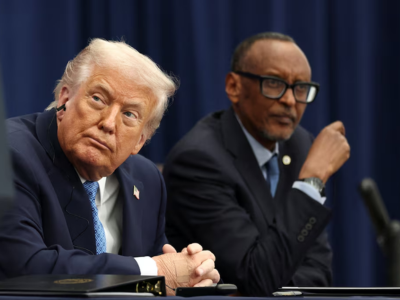
Credit:
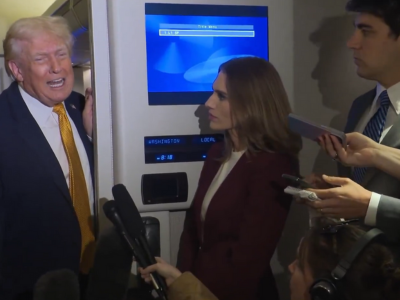
U.S. President Donald Trump praised the leaders of the Democratic Republic of Congo and Rwanda on Thursday for signing a U.S.-brokered agreement aimed at ending decades of conflict in eastern Congo, while pledging expanded American access to the region’s vast mineral wealth.
Yet as the ceremony unfolded, reports of fresh fighting underscored the fragile footing of the pact on the ground.
The signing at the Donald J. Trump Institute for Peace marked a formal endorsement of the Washington Accords, first inked in June 2025 after months of mediation involving the United States, the African Union, and Qatar.
Presidents Félix Tshisekedi of Congo and Paul Kagame of Rwanda, joined by regional leaders including Angola’s João Lourenço and Burundi’s Évariste Ndayishimiye, committed to joint security mechanisms, economic integration, and neutralizing armed threats. Trump, who has long eyed a Nobel Peace Prize, hailed the deal as a “great day for Africa” and announced bilateral agreements to channel U.S. firms into Congo’s cobalt and coltan mines, vital for batteries, technology, and defense industries.
The accords build on a November framework from Doha talks between Congo and the M23 rebels, the most powerful force in the conflict. Provisions include Rwanda lifting “defensive measures” along the border once Congo disarms Hutu militias such as the FDLR, remnants of the 1994 genocide perpetrators.
Both sides pledged to cease support for non-state armed groups, with a joint coordination body established to monitor compliance. Economic pillars promise shared infrastructure and trade corridors, potentially unlocking billions in rare earth exports currently dominated by China, which controls the majority of mining and processing.
Tshisekedi described the deal as “a turning point” toward lasting stability, expressing confidence in Rwanda’s adherence. Kagame echoed cautious optimism, crediting Trump’s “bold leadership” but stressing that African ownership would be critical for success. U.S. Secretary of State Marco Rubio, alongside Qatari and UAE envoys, hailed the moment as pivotal for Great Lakes prosperity. Trump teased follow-up business summits, promising that American companies would “make a lot of money” alongside local partners in mining, energy, and tourism.
Skepticism remains strong among analysts and residents. Eastern Congo’s war, rooted in the fallout of the 1994 genocide, has claimed millions of lives and displaced more than seven million people, fueling one of the world’s worst humanitarian crises. Over 100 armed groups operate in North and South Kivu, but M23—accused by U.N. experts of operating under Rwanda’s de facto command—holds sway after seizing Goma and Bukavu earlier this year.
Fighting continues despite ceasefires, with Congolese forces and M23 trading blame for airstrikes and ground assaults near Kamanyola earlier this week. In Goma, the airport remains closed, banks shuttered, and prices for basic goods have spiked amid rising crime.
Critics in Congo decried the exclusion of M23 from Washington talks, viewing the deal as symbolic amid stalled Doha negotiations. Rwanda denies backing M23, framing its presence as border defense against FDLR threats, while Congo insists Kigali’s withdrawal is non-negotiable for peace. Analysts warn that no immediate halt to M23’s territorial gains is likely.
Congolese officials urged sustained U.S. pressure, calling the pact “a good step” but not a final solution. Rwanda’s Foreign Minister Olivier Nduhungirehe accused Congo’s army of sabotage via drones, insisting defensive postures would end only with FDLR neutralization.
As business leaders convene for investment talks, the accords’ true test lies in implementation: disarming fighters, verifying withdrawals, and channeling mineral revenues to rebuild shattered communities.

0 Comment(s)